

Building a web app isn’t just about features. It’s about how users interact with it. A good app should feel natural, predictable, and easy to use. Small usability improvements often make a big difference in how people experience your product.
Navigation Enhancements
Make Pages Easy to Bookmark
Update the URL to reflect the current state when users search, filter, or view specific content. This allows them to return to the same place without repeating steps.
-
Example:
- Before: User searches for “Vehicle XYZ”
- After:
khalil232.com/someapp/search?query=Vehicle+XYZ
This saves time and makes your app feel more reliable.
Support Deep Linking
Allow users to open specific records, sections, or screens directly using a URL. This avoids repetitive navigation.
-
Example:
khalil232.com/someapp/vehicle/12345
Deep linking is especially useful in business apps where users frequently revisit or share specific records.
Respect User Actions
Avoid Restricting Basic Functionalities
Do not block basic browser actions like cut, copy, or paste. Users expect these to work everywhere.
-
Avoid:
- Disabling right-click
- Preventing text selection
Blocking these actions creates frustration and breaks normal user behavior.
Non-Blocking Processes

Reduce Blocking Actions
Full-screen loaders and blocking overlays interrupt users and slow them down. Instead, allow them to continue working.
-
Better approaches:
- Run tasks in the background
- Keep screens interactive
- Show completion using notifications or toasts
Example
While generating a report, let users continue using the app. Notify them when the report is ready to download.
This keeps the app responsive and efficient.
Visual Clarity
Make Links Visually Distinct

Links should clearly look clickable. Use color, underline, or icons to differentiate them from normal text.
-
Example:
- Blue, underlined text for links
Clear visual cues improve navigation and reduce confusion.
Confirm Difficult Actions
Always confirm actions that cannot be undone, such as deleting data.

-
Example:
- “This action will permanently delete your record. Do you want to continue?”
This prevents mistakes and gives users confidence.
Data Management
Manage Text Length in Tables or Lists
Long text can break layouts and reduce readability. Handle it properly.
-
Recommended:
- Truncate long text
- Add “Read More” options
- Use tooltips or modals for full content
This keeps the UI clean without hiding important information.
File Upload Previews
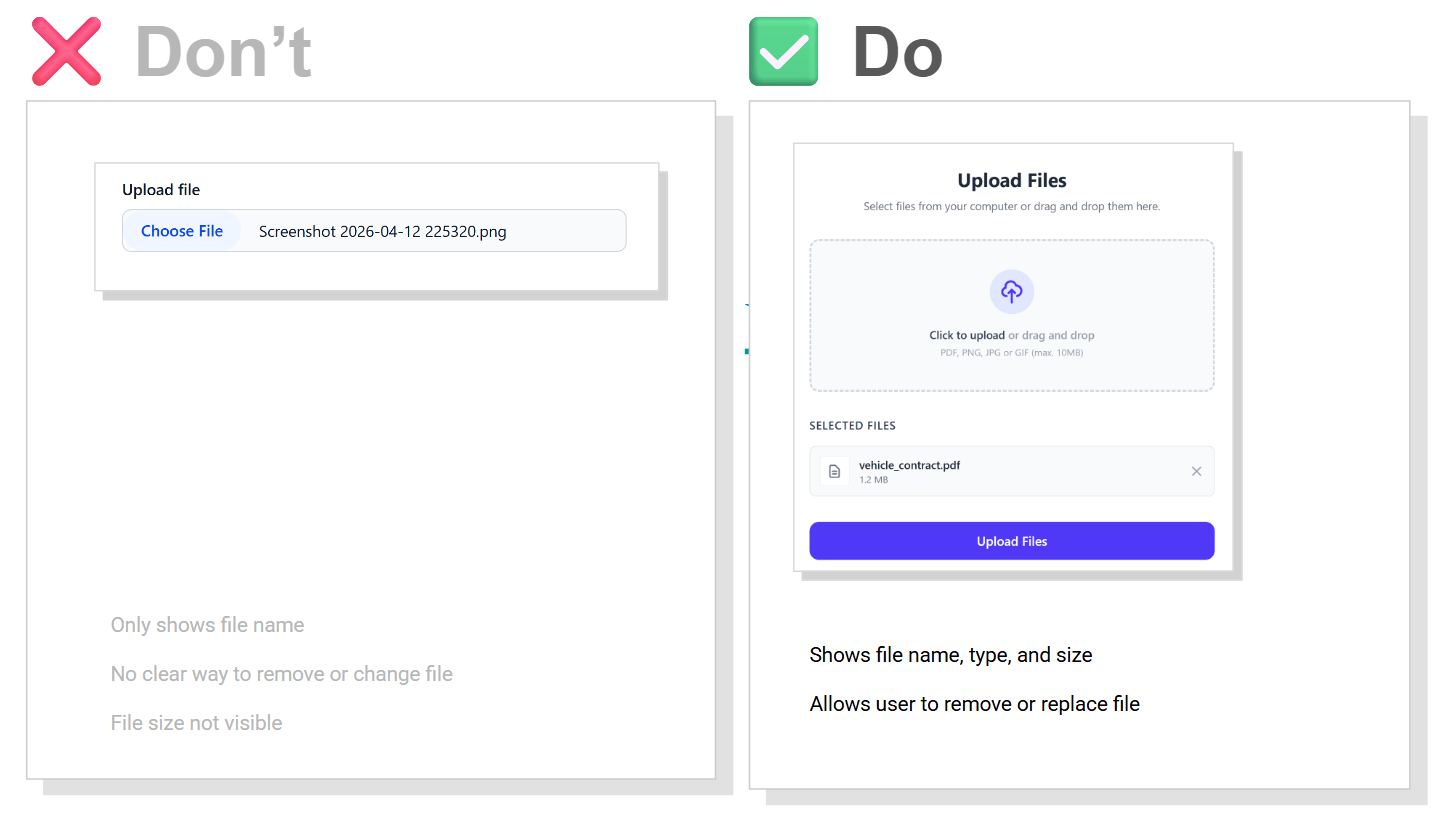
Show a preview before users submit uploaded files. Include key details.
-
Display:
- File name
- File size
- File type
Users should be able to remove or replace files easily before submitting.
Conclusion
User-friendly apps are built through small, thoughtful decisions.
Making navigation easier, avoiding unnecessary restrictions, and keeping the interface responsive all contribute to a better experience. These improvements may seem minor, but they significantly reduce user frustration and make your app more enjoyable to use.